
mESC-IS 2024
Speakers
– Rezan Demir-Cakan
– Vladimir Fateev
– Selmiye Alkan Gürsel
– Sanjay Mathur
– Amdulla Mekhrabov
– İslam Mustafayev
– Saim Özkar
– Olim Ruzimuradov
–Bilge Saruhan-Brings
– Grigor Tatishvili
– Ivan Tolj
–Jong-Sung Yu
Currently we are in correspondence with our potential invited/plenary speakers. We will soon add new speakers and the titles to this page . Normally invited/ plenary presentations are by invitation only. A certain fraction, however, comes from the regular submissions made to the symposium . If you would like to submit your work as invited/plenary presentation please submit your work as early as you can. if you think your presentation is of interest for the subject area as a whole ( e.g. Batteries and Supercapacitors) please select “Oral Invited” while submitting your abstract. Similarly If your presentation is of interest for mesc-is audience as a whole please select ” Oral Plenary“. We will let you know which form of presentation your submission is accepted to.

Professor Rezan Demir-Cakan
Gebze Technical University
“Design of anode materials for practical Na-ion batteries”
Sodium-ion batteries (NIBs) are now attracting unprecedented attention due to their abundant and widely distributed Na sources, as well as their low cost, safety and excellent low-temperature performance, etc., with great potential for low-speed transportation and large-scale energy storage. Thanks to great basic research and industrial exploration, currently practical NIBs can reach energy density around 120-150 Wh/kg, but still cannot compete with LIBs. To further increase the energy density of NIBs, making higher capacity electrode materials is the most important task. During the talk, application-oriented fundamental issues of anode electrodes, such as synthesis methodologies of stable and high-performance alloy/carbon anode materials and understanding of structure changes, interfaces and Na storage mechanisms will be addressed
Rezan Demir-Cakan completed her bachelor and master degree from Yildiz Technical University at the Chemical Engineering Department. Rezan Demir-Cakan received her PhD from the Max Planck Institute for Colloids and Interfaces (2009). She then worked as a postdoc researcher in Jean-Marie-Tarascon’s group from 2009 to 2012, focusing on rechargeable lithium batteries, more specifically lithium-sulfur batteries. She is currently working as a Professor at the Department of Chemical Engineering, Gebze Technical University (Kocaeli/Turkey). Her current research focuses on the synthesis of nanostructured energy materials and their applications in the field of Na-ion, Li-S and aqueous electrolyte Zn-ion batteries. She has received several awards such as French Embassy Fellowship (2023, 2018), Turkish Academy of Sciences Distinguished Young Scientist Award (2018), L’Oreal Turkey Young Women in Science (2016), Science Academy Young Scientist Award (2015), IMLB Young Researcher Award (2012) and Japan Carbon Award (2008). She has been funded by numerous national and international research projects. Since 2014 she has been working as an expert on energy related calls in EU funded projects (H2020, HE) and is the coordinator of the EU project with the acronym TwinBat.

Professor Vladimir Fateev
Kurchatov Institute
“Storage and start-up of PEM fuel cell at subzero temperatures”
Vladimir Fateev is the head of department of electrochemical and hydrogen technologies at NRC “Kurchatov Institute”. He graduated Lomonosov Moscow State University, Department of Chemistry in 1974. As a professor of physical chemistry since 1998 , Professor Fateev is an active member in several research councils in Russia. His research activity includes: mathematical modeling and experimental study of high-pressure (up to 200 bar) PEM water electrolysers. PEM fuel cells for transport and portable application. Platinum and non-platinum electrocatalysts. Optimization of current collectors/gas diffusion electrodes. New membranes. Magnetron sputtering for protective coatings and catalyst synthesis. More than 300 publications and patents.

Professor Selmiye Alkan Gürsel
Sabancı University
“Materials for Fuel Cells and Electrolysis Technologies: Challenges and Perspectives”
Selmiye Alkan Gürsel received BSc, MSc and PhD degrees from the Middle East Technical University Department of Chemistry and, as part of her doctoral studies, she carried out research on electrochromic polymers at the University of Florida (USA). She conducted post-doctoral studies on fuel cells in the General Energy Department of Paul Scherrer Institute. She has been working as a faculty member in the Materials Science and Nano Engineering Program at Sabanci University since 2008. She is directing and participating various international and national projects on fuel cells, polymer membranes, graphene, lithium-ion batteries, lithium -air batteries, electrolyzers. She participated in Graphene Flagship Project, in FP7 (Graphene-Driven Revolutions in ICT and Beyond) and Horizon 2020 (Graphene- Based Disruptive Technologies) phases as the primary investigator, scientific representative of the work package on fuel cells and national contact point from Turkey. She was awarded by L’Oreal Young Woman in Science Scholarship 2010, METU Prof. Dr. Mustafa N. PARLAR Research Incentive Award 2012, Science Academy -Young Academics Prize Scholarships (BAGEP) 2013. She received “Academic Prize” in the inaugural Women Energizing Turkey Awards endowed by the Turkish Ministry of Energy and Natural Resources in 2018. She is currently Vice-Dean of Research at Sabanci University Faculty of Engineering & Natural Sciences. (mESC-IS)
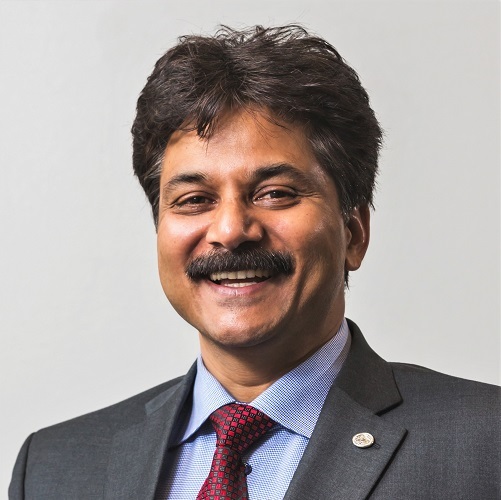
Professor Sanjay Mathur
University of Cologne
Challenges of Greener Processing of Energy Harvesting Materials
We regret to inform you that Professor Sanjay Mathur can not attend the symposium due to a date clush. We expect to host him in mESC-IS 2025 to take place in Kocaeli University, (near Istanbul )in early September 2025 .
Sanjay Mathur (born 1968) is an inorganic chemist, current president (Oct. 2022 – Oct. 2023) of the American Ceramic Society.[1] acting director of the Institute of Inorganic Chemistry at the University of Cologne,[2] honorary co-director of the Institute of Renewable Energy Sources at the Xi’an Jiaotong University,[3] a World Class University Professor at the Chonbuk University. He is an adjunct professor at the Indian Institutes of Technology in Chennai and has held visiting professorships at the Central South University, the Tokyo University of Agriculture and Technology, the National Institute of Science Education and Research. He was awarded the Honorary Doctorate of the Vilnius University in 2016. He is an elected fellow of the American Ceramic Society,[6] the American Society for Metals,the European Science Academy, the Indian National Science Academy and has been awarded with the fellowships of the Alexander von Humboldt Foundation.[10] Mathur is known for his library of single source precursors for the production of nanostructured ceramic materials with tailormade properties,attaining a h-index of 70 and over 18000 citations.

Professor Amdulla O. Mekhrabov
Azerbaijan State University of Economics (UNEC)
A new photovoltaic powered electrolyses unit for production of hydrogen from fresh and sea-water– Prototype Design
Amdulla Mekhrabov doctor of physical and mathematical sciences, works as a Research Professor at the “UNEC Composite Materials Scientific Research Center” of the Azerbaijan State University of Economics (UNEC). He graduated from Physics Department of Azerbaijan State University in 1974, obtained his Ph. D. (1978) and Doctor of Science (1990) degrees in Solid State Physics and Materials Science from Lomonosov Moscow State University. He then joined the Physics Department at Azerbaijan State University as a faculty member. He was a post-doc for a year in 1984 at Dept. of Materials Science and Engineering in the Tokyo University. In 1991/1992 he was a Fullbright Professor at Dept. of Chemical and Nuclear Engineering in the University of California at Santa Barbara, USA. Professor Mekhrabov then joined Metallurgical and Materials Engineering Dept. at the Middle East Technical University, Ankara, Türkiye where he led a research group from 1992 till 2023. He then joined Azerbaijan Technical University where he was the director of Novel Materials and Nanotechnologies Institute from 2023 till 2024. Professor Mekhrabov’s research interest covers solid state physics, alloy design, computational materials science, metallic bulk amorphous and nanocrystalline materials, irradiation effects on materials, hydrogen storage materials, green energy- materials and systems, etc.

Professor Islam Mustafayev
Institute of Radiation Problems , Azerbaijan
“Low-carbon radiation-thermal technology for hydrogen energy”
Islam Mustafayev – graduated from the Faculty of Physics at Azerbaijan State University, earned his PhD from the Institute of Chemical Physics in Moscow, and his Doctor of Sciences from the Leningrad Institute of Technology. Since 1996, he has been a professor specializing in the radiation chemistry. He completed advanced training courses at the University of Maryland and the Alabama National Radiation and Air Monitoring Laboratory in the USA. Areas of interest – Green Radiation, Hydrogen energy, Low-carbon technology. He has been working at the Institute of Radiation Problems since 1992, and since 2021 he has been the Director General of this Institute. He is author about 350 scientific works, including 20 patents and more than 50 projects.

Professor Saim Ozkar
Middle East Technical University
“Advances in enhancing the utilization efficacy of ruthenium(0) nanocatalysts in hydrolytic dehydrogenation of ammonia borane”
Saim Özkar has completed his undergraduate study in chemical engineering at the Technical University of Istanbul in 1972, and then worked for two years in industry. He received his Ph.D. in inorganic chemistry at the Technical University of Munich, Germany in 1976 before joining the Department of Chemistry, Middle East Technical University as an Assistant Professor in 1979, where he is now a Full Professor. He spent one year at the Max Planck Institute in Mülheim as Alexander von Humboldt-Foundation Scholar in 1986, 2 years at University of Toronto as visiting professor in 1988-1990, and 9 months at Colorado State University as Fulbright Fellow in 2000. His current research interests involve the transition metal nanoparticles; synthesis, characterisation, and catalytic applications in hydrogen generation, hydrogenation, oxidation, and coupling reactions.Saim Özkar was awarded the TÜBİTAK 1996 Science Prize and has been a member of Turkish Academy of Sciences since 1996.

Professor Olim Ruzimuradov
Turin Polytechnic University in Tashkent
SiO-based Anode Materials: Surface Modification and Lithium Storage Properties
Olim Ruzimuradov is a professor of chemistry at at the Turin Polytechnic University in Tashkent. He graduated from Chemistry Department of Samarkand State University in 1996. He received his PhD degree in Polymer Chemistry (2006) . Olim Ruzimuradov was a post-doc at University of Surrey, 2007-2008. He then was a Research Fellow Ehime University, 2009 and Kyoto University,2010-2011 Japan . He collaborated with a number of intitutions, namely the Technical University of Darmstadt, Germany, Aix-Marseille University, France , Technical University of Crete (2015), and KITECH, South Korea . His research interests focus on in such areas as one-dimensional solid ion conductors; the electrochemical behaviors of nanostructured materials, production of nanoscale adsorption/ photocatalytic materials and their use in the chemical industry, Conductive ITO nanowires and the development of functional polymer-metal oxide nanocomposites .
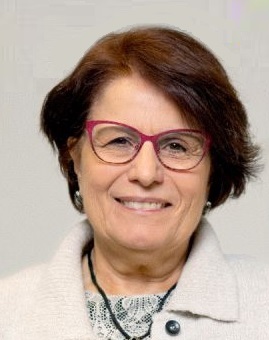
Dr. Bilge Saruhan-Birngs
German Aerospace Center
Emerging Design Strategies of Energy Materials for Next-Generation Batteries and Supercapacitor
We regret to inform you that Dr. Bilge Saruhan-Brings can not attend the symposium due to an unexpected hold up in the process . However we will have the presentation of Dr. Neslihan Yuca, a close colleage of Dr. Saruhan Brings , with a title Advancements in High-Voltage Lithium-Rich Cathode Materials: Performance, Challenges, and Future Perspectives. We are hoping that Dr. Saruhan-Brings will join us next year in mESC-IS 2025 to take place in Kocaeli University in early September.
Bilge Saruhan received her BSc (1980) and MSc (1982) in Materials Science from the Faculty of Chemical and Metallurgical Engineering Istanbul Technical University (ITU). She obtained her PhD in 1987 at the Materials Research Centre of the University Limerick in Ireland. She then joined the German Aerospace Center (DLR) in Cologne, first as post-doc at the Ceramics Department in the Institute of Materials Research, and then moved to research and project management position in 2001 at the Department of High-Temperature and Functional Coatings both in the same institute. In 2002, she received her lectureship qualification (habilitation) from the Technical University of Freiberg. Presently, she leads the research group on functional coatings. Her research activites cover energy storage electrodes and systems and functional nano-structured layers and catalysts for various energy applications . Her activities in a recent EU projects, involve electrochemical energy storage materials and devices varying from integrated damage detection and triggered self-healing in batteries to textile and fibrous reinforced composites incorporated smart energy storage and conversion systems. . She has authored/co-authored up to date over 140 papers, published 1 book and holds 3 patents.

Grigor Tatishvili
R.Agladze Institute of Inorganic Chemistry and Electrochemistry
“Prospects of Green Hydrogen development in Georgia as a new paradigm for industry-focused academic research”
Academic Doctor of Physics and Mathematics (1994), Director of the R.Agladze Institute of Inorganic Chemistry and Electrochemistry of the Tbilisi State University, (former Institute of the Georgian National Academy of Sciences), (2006 – till now). Graduated from the Faculty of Physics of Tbilisi State University (1983). The scientific supervisor of the several research projects, author about 80 scientific publications, and 6 patents (3-national, 3-international). Member of the editorial board of the Journal “Chemical Problems” (2015 – till now), and Member of the editorial board of the Caucasus Abstracts Journal of Nanoscience and Nanotechnology (2020 – till now); Research Interests: charge transfer, energy transfer; adsorption, catalysis; electrochemical alloys, coatings; new materials. Professional Awards: (2016) Certificate of honor of Georgian National Academy of Sciences; (2023) Laureate the Giorgi Nikoladze prize from the Georgian National Academy of Sciences for the last 5-year cycle of scientific works.
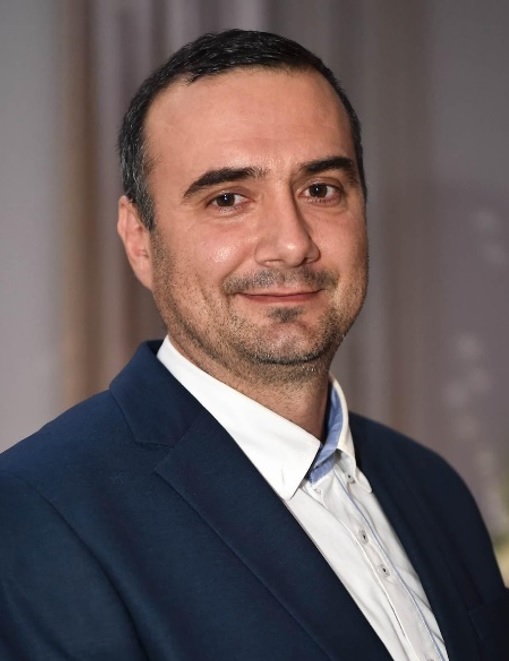
Professor Ivan Tolj
University of Split
Advancing Ferry Propulsion with PEM Fuel Cell and Battery Hybrid Systems
Ivan Tolj graduated , University of Split (Croatia) in 2005 . He obtained his doctoral degree on his work on membrane fuel cell performance in 2012 and his Doctor of Science degree in 2014 both from the University of Split. From 2012 to 2014 he worked as a postdoctoral researcher at HySA Systems, SAIAMC (South African Institute for Advanced Materials Chemistry), University of the Western Cape, South Africa in the field of hydrogen technologies. He is currently Professor at FESB in the Department of thermodynamics where he is doing research in the field of hydrogen technologies: fuel cells, hydrogen production, storage and compression, fuel cell hybrid system energy management and control etc. He serves as the Assistant Editor for the International Journal of Hydrogen Energy and as a guest editor for the Journal of Energy Storage and Energies. He also served as the conference chair for the 6th International Symposium on Materials for Energy Storage and Conversion (mESC-IS 2022). His collaborative efforts include partnerships with industry and academic institutions such as the University of the Western Cape, HySA Systems Competence Centre, IFE Norway, Helmholtz-Zentrum Hereon GmbH, Institut Teknologi Sepuluh Nopember, and Impala Platinum Ltd.
Prof. Tolj leads the HORIZON2020 project on “Hydrogen Fuelled Utility Vehicles and Their Support Systems Utilising Metal Hydrides” and is involved in various other projects related to green energy and mobility.

Professor Jong-Sung Yu
Daegu Gyeongbuk Institute of Science and Technology
Engineering Structurally Ordered CoN-Decorated PtCo Intermetallic Alloy for High-Performing Polymer Electrolyte Membrane Fuel Cells
Jung-Sung Yu has graduated from Sogang Universtiy, Seoul (1983) and obtained his Ph.D . in Chemistry University of Houston, in 1983. He was a research fellow Ohio State University, Pennsylvania State University and Northwestern University before joining as professor to Dept. of Advanced Materials Chem., Korea University where he worked from 2008-2015. Professor Jung-Sung Yu is currently with Dept. of Energy Science & Engineering, DGIST. Professor Jung-Sung Yu research interest spans fromn such areas as Nanostructured Materials,, Energy Storage: Battery & Supercapacitor, Fuel cells & Water Electrolysis, Chemical Fuel Production (CO2 Conversion, NH3 synthesis), Photoresponsive Reactions. His major research achievements may be listed as – Magnesium: properties and rich chemistry for new material synthesis and energy applications. (Chemical Society Reviews, 2023, 52, 2145-2192) – Low temperature synthesis of new highly graphitized N-doped carbon for Pt fuel cell supports, satisfying DOE 2025 durability standards for both catalyst and support(Applied Catalysis B: Environmental, 2023, 323: 122179.) – Development of high-energy non-aqueous lithium-sulfur batteries via redox-active interlayer strategy.( Nature Communications, 2022, 13.1: 4629) – Revisiting the role of conductivity and polarity of host materials for long‐life lithium–sulfur battery(Advanced Energy Materials, 2020, 10.22: 1903934) – New PtMg alloy with durable electrocatalytic performance for oxygen reduction reaction in proton exchange membrane fuel cell.(ACS Energy Letters, 2020, 5.5: 1601-1609). He has H-index of 70 and well over 15000 citations. Further details regarding Professor Jung-Sung Yu can be reached at this link
 mesc-is.org